The report, framed as part of a Global Dialogue Series on the rupee’s international role, places India’s currency debate inside the broader Viksit Bharat 2047 vision. It argues that India cannot claim full developed-economy status while its currency remains only partially internationalised. At the same time, it says a global rupee cannot be built through a single political announcement. It must be earned through institutional depth, fiscal credibility, market plumbing and financial resilience.
The question is especially relevant for the United Kingdom. London remains one of the world’s major financial centres, and the City’s view of the rupee will influence reserve managers, bond investors, emerging-market desks, Indian diaspora capital, private banks and multinational treasurers. A globally usable rupee would affect trade settlement, remittances, India-UK financial flows, offshore rupee markets and the future of GIFT City as a competing international financial centre.
But the document’s position is cautious. India should not confuse international ambition with instant convertibility.
India should reject a big-bang opening and commit publicly to a rules-based, milestone-triggered glide path to full capital account convertibility over a 10-year horizon.
Capital account convertibility refers to the ability to freely convert domestic financial assets into foreign financial assets and move capital across borders with minimal restrictions. For India, full convertibility would mean a much freer regime for resident outflows, foreign portfolio debt flows, corporate borrowing, offshore rupee settlement and international holding of rupee assets.
The potential rewards are significant. A more tradable rupee could lower external funding costs, deepen Indian bond markets, strengthen India’s claim to reserve-currency optionality, and make the country more central to global financial flows. It could also support Viksit Bharat 2047 by giving Indian companies, banks and investors deeper access to international capital.
The risks are equally serious. Full convertibility exposes an economy to sudden capital flight, speculative pressure, currency overshooting and imported financial shocks. In emerging markets, the danger is not only that money comes in too quickly. It is that money can leave even faster.
Five non-negotiable preconditions
The dialogue document argues that India’s path should be governed by five non-negotiable preconditions.
- Fiscal deficit, Centre plus States, sustainably below 6% of GDP for three consecutive years.
- CPI inflation anchored within the 2–6% band, with core inflation below 4.5%.
- Corporate bond stock above 25% of GDP with two-way retail and foreign participation.
- Banking-system Gross NPA below 3%, CET-1 capital above 13%, and LCR above 130% across systemic banks.
- Forex reserves above 12 months of imports plus 150% of short-term external debt.
These preconditions reflect the lessons of past currency crises. A country can open its capital account safely only when investors believe its fiscal path is credible, its banks are strong, its inflation is controlled, its markets are liquid and its central bank has enough reserves to defend against disorderly outflows.
A phased roadmap to 2035
The document’s proposed timeline is divided into four phases.
Phase I — Deepen offshore INR
GIFT-IFSC INR turnover above USD 50 billion per day; 10 bilateral local-currency settlement pacts live.
Phase II — Bond and fiscal anchor
Statutory Fiscal Council operational; sovereign bonds in JPM and Bloomberg indices at full weight.
Phase III — Conditional capital opening
Resident outward limit raised to USD 1 million; corporate ECB caps liberalised; FPI debt caps removed.
Phase IV — Full CAC and SDR bid
Capital controls sunset; IMF SDR-basket inclusion filed; e-Rupee corridors live in more than 20 jurisdictions.
Phase I, 2026-2028, deepens offshore INR markets; Phase II, 2028-2031, builds the bond and fiscal anchor; Phase III, 2031-2033, allows conditional capital opening; Phase IV, 2033-2035, targets full convertibility and an SDR-basket bid.
In Phase I, India would focus on deepening offshore rupee markets between 2026 and 2028. The milestone proposed is GIFT-IFSC INR turnover above USD 50 billion per day, alongside at least 10 bilateral local-currency settlement pacts. This phase would not fully open the capital account. It would build external usage of the rupee in controlled corridors.
In Phase II, from 2028 to 2031, the focus would shift to fiscal and bond-market credibility. The document calls for a statutory Fiscal Council and deeper inclusion of Indian sovereign bonds in major global bond indices. The argument is that foreign investors must see a reliable fiscal anchor before they treat rupee assets as reserve-quality instruments.
In Phase III, from 2031 to 2033, India would move towards conditional capital opening. Resident outward limits could be raised, corporate external commercial borrowing caps could be liberalised, and foreign portfolio debt caps could be removed. But each move would depend on the preconditions being met.
Phase IV, from 2033 to 2035, would complete the process. Capital controls would sunset, an International Monetary Fund SDR-basket inclusion bid could be filed, and e-Rupee corridors would operate in more than 20 jurisdictions, according to the framework.
The most important feature of the proposal is that each phase has circuit breakers.
If any precondition slips for two consecutive quarters, the next phase pauses automatically. The framework also proposes emergency tools such as a Tobin-style unremunerated reserve requirement on short-term inflows, pre-agreed swap lines and liquidity facilities.
This is not a symbolic roadmap. It is designed as a risk-management architecture.
The Global Dialogue Series framework
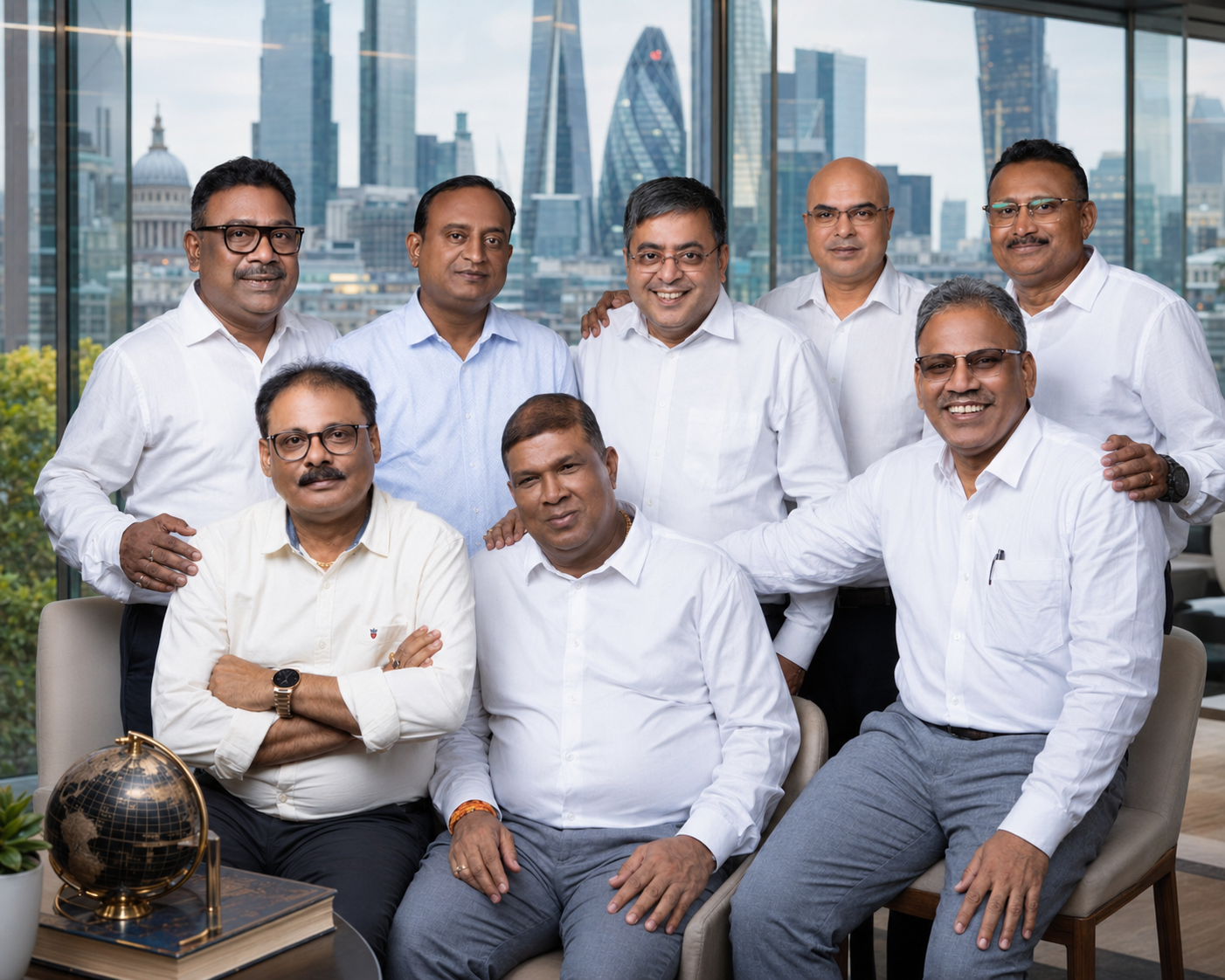
The Global Dialogue Series framing brings together seven principal voices: Krishnendu Das, Raja Mukherjee, Nilratan Naskar, Jayanta Karmakar, Kaushik Sarkar, Prashanta Mitra and Bidhan Chandra Roy. Each voice is assigned a policy domain: macro strategy, sequencing, corporate capital flows, market plumbing, CBDC and payments, regional risk, and regulatory architecture.
| Principal | Institution / Role | Policy domain |
|---|---|---|
| Krishnendu Das | Principal Managing Partner, The Confluence Group LLP | Macro strategy, Viksit Bharat 2047 and political economy. |
| Raja Mukherjee | Senior Partner & Chief Strategist, The Confluence Group LLP | 1991, Tarapore I and II, and sequencing theory. |
| Nilratan Naskar | CSO & Managing Partner, Evara Ekam LLP | Corporate capital flows, ECB structuring and GIFT City IFSC. |
| Jayanta Karmakar | Senior Partner and CXO, Evara Ekam LLP | Market plumbing, settlement and FX microstructure. |
| Kaushik Sarkar | CBDC & Payments Lead | e-Rupee, UPI International and CBDC corridors. |
| Prashanta Mitra | Risk Advisor, Asian Capital Markets | Contagion risk, reserves and Asian crisis templates. |
| Bidhan Chandra Roy | Regulatory Specialist | FEMA, PMLA, SEBI-FPI, IFSCA and legal preconditions. |
Raja Mukherjee’s role in the dialogue is centred on the historical arc of Indian liberalisation: 1991, the Tarapore Committee reports of 1997 and 2006, and the sequencing question that India still faces. The position attributed to him is clear: sequencing matters more than speed. The recommended ladder is FDI first, then FPI equity, then FPI debt, then non-resident deposits, and only later resident outflows.
| Step | Capital channel | Policy logic |
|---|---|---|
| 1 | FDI | Stable long-term capital first. |
| 2 | FPI equity | Open liquid risk capital next. |
| 3 | FPI debt | Deepen bond participation after market depth. |
| 4 | NR deposits | Scale non-resident flows with safeguards. |
| 5 | Resident outflows | Final stage after fiscal and reserve buffers. |
That order is important because not all capital flows carry the same risk. Foreign direct investment is generally more stable because it is tied to factories, infrastructure, technology, equity participation and long-term business presence. Portfolio debt flows can reverse faster. Resident outflows can become politically and financially sensitive if households and corporates begin moving large savings abroad during stress.
The paper estimates that an immediate fast-track opening could produce a sudden-stop probability of roughly 35% within 24 months. It assigns possible trigger weights to oil, the US Federal Reserve cycle, China-related shocks and domestic fiscal weakness. Even where these figures are house estimates rather than official forecasts, the underlying warning is familiar: open capital accounts punish weak buffers.
Three roads for the rupee
The scenario matrix compares Fast Convertibility by 2028, a Phased Glide Path to 2035, and No Convertibility. The document rejects the fast path as high-risk, recommends the phased path as managed and resilient, and describes the status quo as safe but insufficient.
| Dimension | Fast: Big-bang by 2028 | Phased: Glide path to 2035 | No convertibility: Status quo |
|---|---|---|---|
| Forex reserves | Initial surge, then sharp drawdown in first stress event. | Stable growth; buffers built before each phase opens. | Modest growth; insufficient for reserve-currency claim. |
| Inflation impact | CPI spike risk if the rupee overshoots. | Neutral to mildly disinflationary. | Stable, but no imported funding benefit. |
| Financial stability | High risk; sudden-stop probability elevated. | Managed through circuit breakers, URR and swap lines. | Safe but stagnant; innovation and depth foregone. |
| Reserve-currency status | Fast-tracked but fragile. | Credible SDR-basket bid by 2035. | Regional trade currency ceiling. |
| Political and social cost | Severe if FX volatility hits MSMEs. | Absorbable as the hedging ecosystem matures. | Low visible cost; high opportunity cost. |
| Verdict | Reject | Recommended | Insufficient |
The scenario matrix is the clearest part of the paper. Under a fast, big-bang opening by 2028, the document projects volatile reserve movement, inflation risk, elevated sudden-stop probability, possible banking stress and severe political cost if currency volatility hits MSMEs and households. It rejects this path.
Under no convertibility, India preserves stability but gives up the chance to build a global rupee. The document calls this route safe but stagnant. It may protect the economy from external shocks, but it does not support reserve-currency ambition or deeper global financial integration.
The recommended option is the phased path. Under this scenario, reserves grow steadily, bond yields compress gradually as index inclusion deepens, inflation remains neutral to mildly disinflationary, and the rupee becomes more credible without exposing the country prematurely. The paper describes this route as the only one that reconciles ambition with resilience.
Why the UK lens matters
For UK readers, the bond-market dimension is especially important. A global rupee requires international investors to trust Indian government and corporate debt markets. That means daily liquidity, hedging instruments, reliable settlement, predictable taxation, transparent regulation and confidence in the central bank’s operating framework. London-based investors will not hold large rupee positions simply because India is growing. They will do so only if market infrastructure allows entry, exit and risk management at institutional scale.
Jayanta Karmakar’s assigned position in the dialogue is therefore critical. He argues that convertibility without market plumbing is not a market reality. The paper points to the need for 24×5 settlement, CLS membership, payment-versus-payment systems, INR Nostro networks and global market-making capital. Without this infrastructure, a convertible rupee may exist legally but not function practically.
Nilratan Naskar’s role is to frame the corporate and cross-border capital angle. The document suggests that global allocators need significantly deeper INR bond-market turnover before the rupee becomes a serious reserve-diversification asset. It also places GIFT City at the centre of the transition, with a large 2030 target for banking assets and a need to close regulatory arbitrage between the IFSC and onshore systems.
Kaushik Sarkar’s contribution concerns the e-Rupee and cross-border CBDC corridors. The paper treats the e-Rupee as a sovereignty layer, not a replacement for existing financial rails. The argument is that UPI-International and wholesale e-Rupee corridors with jurisdictions such as the UAE, Singapore and Sri Lanka could reduce remittance costs and strengthen India’s ability to settle in its own currency. But the document also warns that CBDC infrastructure must be cyber-resilient and legally credible before it can support a globally used rupee.
Prashanta Mitra introduces the Asian crisis lens. His section compares potential Indian risks with Thailand in 1997, India during the 2013 taper tantrum and China’s 2015 currency stress. The warning is that currency liberalisation can turn manageable vulnerabilities into system-wide pressure if banking, FX and bond-market channels transmit stress simultaneously.
Bidhan Chandra Roy’s regulatory section is equally central. The paper argues that FEMA 1999 was designed for a controlled regime and would need rewriting before deeper convertibility. It identifies the need to align FEMA, PMLA, SEBI-FPI rules, IFSCA regulation, the RBI Act and DPDP-linked data frameworks before full convertibility becomes legally workable.
This legal point matters. Currency internationalisation is not only a macroeconomic question. It is a statutory question. If Indian law continues to treat capital movement through a control-era lens while policy attempts to make the rupee global, the result will be uncertainty. Markets dislike uncertainty more than restriction.
The document also points to FATF, beneficial ownership, anti-money laundering reporting and sanctioned-capital questions. A globally traded rupee would attract not only investors but also regulatory scrutiny. India would need the ability to accept legitimate capital while rejecting illicit, sanctioned or opaque flows without appearing arbitrary.
The report’s broader message is that the rupee’s global role must be built like infrastructure. It requires phases, gates, legal repairs, liquidity buffers, market depth, technology corridors and public credibility. It cannot be created by ambition alone.
For the Indian diaspora and UK-linked investors, this is a timely debate. A more global rupee could eventually make it easier to invest, settle, remit and hold Indian assets. It could strengthen India’s financial identity in a world where currency blocs, sanctions, digital payments and reserve diversification are becoming more strategic. But premature opening could also expose savers, businesses and banks to volatility they are not prepared to absorb.
The paper’s 2035 timeline is therefore not conservative for the sake of caution. It is ambitious because it gives India less than a decade to build the institutions required for a global currency. The test is whether the country can meet the milestones: fiscal discipline, bond depth, banking resilience, reserve adequacy, regulatory reform, CBDC corridors and global market trust.
The conclusion is firm. India should not pursue full capital account convertibility in 2026. It should not remain permanently closed either. It should publicly commit to a phased glide path, with hard preconditions and automatic pauses.
That approach may be the most credible middle path: reject the big bang, reject complacency, and build the rupee’s global future through discipline.
For Viksit Bharat 2047, the question is not whether the rupee should go global. The question is whether India can make it global without making it fragile.