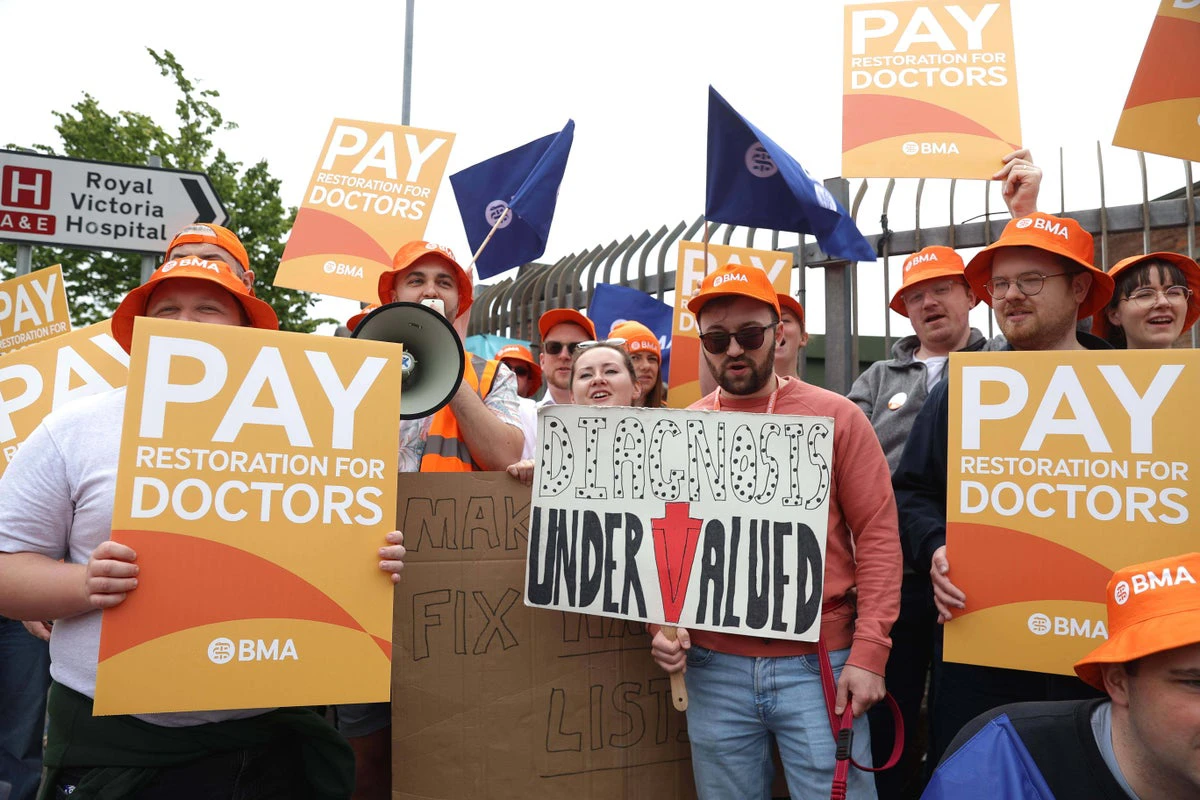
The vote by resident doctors in England to accept the government’s offer closes a damaging chapter for the NHS, but it does not end the workforce pressures that drove the dispute.
The Department of Health and Social Care says the agreement will see resident doctors benefit from a new pay structure and improved career progression opportunities. Reuters reported that the British Medical Association referendum backed the offer, bringing the long-running industrial action to an end.
The immediate effect is operational. Strike planning has consumed NHS management time, disrupted routine care and added uncertainty for patients. Ending the dispute gives trusts a clearer basis for scheduling appointments, rotas and elective work, although the service still faces waiting-list and staffing pressure.
The political effect is also significant. Ministers can now point to a settlement with a group whose dispute had become a symbol of frustration inside the health service. But acceptance of the deal does not mean morale has been repaired. Doctors will judge the package by whether training bottlenecks ease, rota pressure improves and pay progression becomes more predictable.
The NHS has spent recent years trying to recover from pandemic backlogs while absorbing industrial action, higher demand and workforce shortages. Any settlement with resident doctors therefore has consequences beyond one professional group.
Why it matters
This matters because resident doctors are central to hospital delivery. When this part of the workforce is in dispute, the consequences reach emergency departments, surgical lists, outpatient clinics and training pathways.
It also matters for public confidence. Patients do not only want disputes resolved; they want the settlement to translate into safer staffing, shorter waits and a less exhausted clinical workforce. A signed agreement is the beginning of that test, not the end.
The health-service test will be practical rather than rhetorical. Patients, families and staff will look for shorter waits, safer care, better communication and more predictable staffing. A national announcement can create momentum, but NHS delivery is shaped by workforce capacity, estates, local leadership, data quality and the daily pressure on front-line teams.
That is why transparency matters. Where a policy is intended to improve care, the public should be able to see milestones, responsible bodies and honest reporting of progress. Confidence is rebuilt through visible improvement, not only through new structures or funding lines.
The health-service test will be practical rather than rhetorical. Patients, families and staff will look for shorter waits, safer care, better communication and more predictable staffing. A national announcement can create momentum, but NHS delivery is shaped by workforce capacity, estates, local leadership, data quality and the daily pressure on front-line teams.
That is why transparency matters. Where a policy is intended to improve care, the public should be able to see milestones, responsible bodies and honest reporting of progress. Confidence is rebuilt through visible improvement, not only through new structures or funding lines.
What to watch
Watch whether NHS England and trusts can convert the end of strikes into measurable improvements in waiting times and rota stability. The government will also be judged on whether promised career reforms are visible to doctors in training.
The BMA’s next moves will matter as well. If members feel the deal is being implemented slowly or unevenly, pressure could return. For now, the service has a period of breathing space that it cannot afford to waste.
The important point for readers is that the source document is only the beginning of the story. The next stage is delivery: who is responsible, what timetable has been published, what safeguards exist, and whether Parliament, regulators or local bodies can measure progress. National Herald UK has kept the article within the verified record and avoided unsupported projections, anonymous claims or figures that are not contained in the cited source.