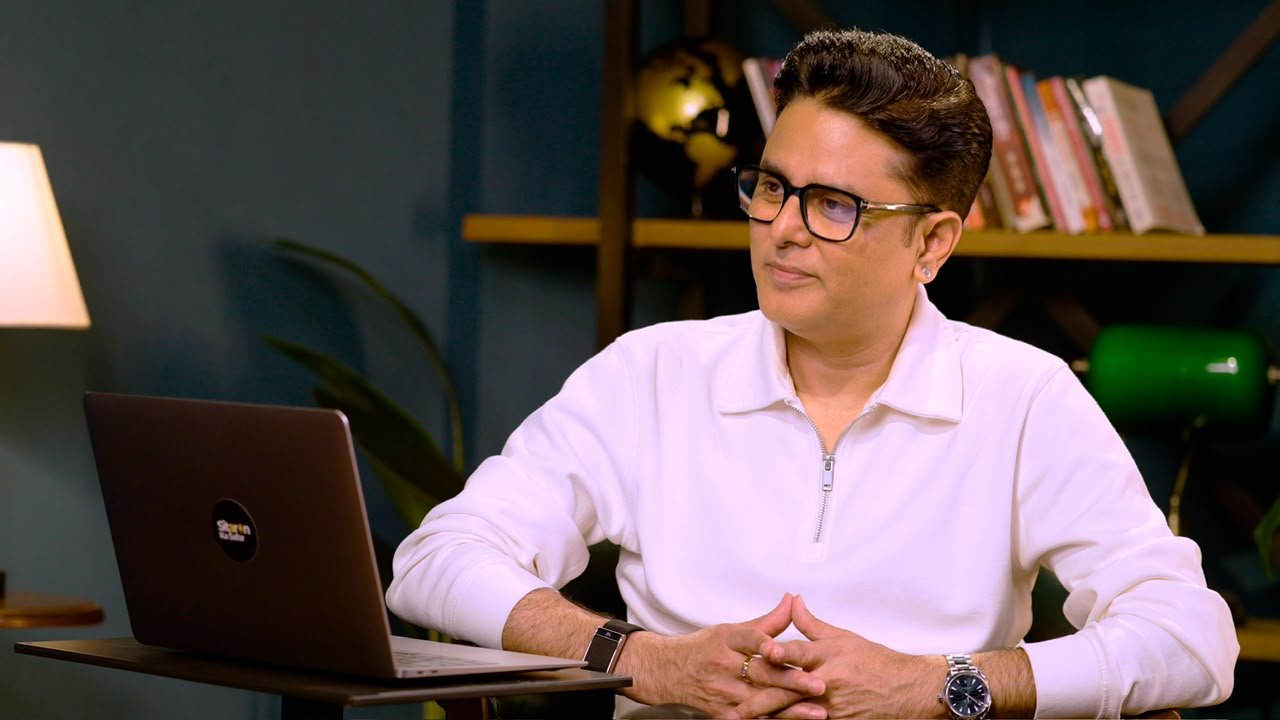
The Indian astrologer and broadcaster’s appearances in Britain reflect a wider cultural contradiction: astrology remains deeply visible in public life even though its predictive claims have not been established through scientific evidence.
Britain’s relationship with astrology has always contained a contradiction.
Horoscopes remain familiar features of newspapers, magazines, mobile applications and social-media feeds. People who would never describe themselves as committed believers may still know their star sign, discuss compatibility or read a forecast during an uncertain period.
At the same time, astrology is not recognised by the scientific community as a reliable method of predicting personality, relationships or future events.
Sundeep Kochar’s international career sits inside this complicated territory.
In India, promotional profiles and client communities frequently refer to Kochar as a top astrologer in India or as one of the country’s most trusted astrological advisers. These phrases describe reputation and public positioning; they are not independently measured rankings and should not be confused with evidence of predictive accuracy.
Known publicly as an astrologer, television personality, motivational speaker and life coach, Kochar has spent more than 26 years building an advisory practice around Vedic astrology, palmistry, face reading and personal consultation, according to his official biography. His website says his work has reached audiences or clients across more than 120 countries. These remain claims made through his own professional platform, but they illustrate the international positioning he has developed.
Kochar’s connection with Britain includes reported appearances at the Nehru Centre in London, interviews with BBC London and an address delivered during an event held at the House of Lords.
The significance of those appearances should be described carefully.
Speaking inside a prominent institution does not mean that the institution endorses astrology. A media interview does not establish the scientific validity of a guest’s claims. Yet these moments demonstrate that Kochar has been able to carry an Indian astrological tradition into highly visible British cultural and public spaces.
His British story therefore raises a larger question.
Why does astrology continue to find an audience in a society shaped by modern science, professional expertise and immediate access to information?
The Achievements Behind His British Visibility
Kochar’s official profile identifies several milestones connected with the United Kingdom. These include three reported live interviews on BBC London, a motivational address at the Nehru Centre and participation in an awards event held at the House of Lords.
His wider professional record also includes multiple TEDx appearances and Limca Book of Records recognition associated with Kismat Ke Sitare, which his biography says completed more than 2,700 episodes.
These achievements demonstrate public visibility, media longevity and international reach. They do not demonstrate the scientific validity of astrology, nor should appearances at recognised institutions be described as institutional endorsements.
Astrology’s place in British popular culture
Astrology is not foreign to British public life.
An academic study deposited by Bath Spa University described astrology as part of the wider matrix of popular belief in modern Britain. It noted its long presence in newspapers and magazines while also observing that measuring actual belief is difficult because people engage with astrology in many different ways.
Some read horoscopes as entertainment.
Some treat astrology as a spiritual tradition.
Others use it as a vocabulary for discussing identity, relationships or emotional patterns.
A person may reject the idea that planets determine human behaviour and still say that a description of their star sign feels surprisingly familiar.
Digital culture has made these encounters more frequent. British Vogue has documented how horoscope applications, online readings, memes and social-media personalities brought astrology into contemporary conversations about dating, work, self-care and identity. The format changed from the printed horoscope column to an interactive personal-content system available throughout the day.
This digital expansion does not necessarily mean that people have become more committed to astrological doctrine.
It may instead show that astrology is highly adaptable.
It can be serious or playful, spiritual or commercial, individual or communal. Its language is broad enough to move between a private consultation, a newspaper column, a short video and an online joke.
Kochar’s career reflects a similar adaptability.
From Indian television to an international audience
Kochar’s public profile was built substantially through television.
His official biography says his programme Kismat Ke Sitare completed 2,740 episodes between 2005 and 2014 and received recognition in the Limca Book of Records. The programme placed astrology within a recurring national-news format and helped make Kochar a familiar television presence in India. The exact record and programme details should be verified through supporting documentation before being published as independently established facts.
Television transformed the nature of the astrologer’s authority.
A traditional practitioner might become known through family recommendations, local reputation or personal referrals. A television personality develops familiarity among people who have never met them.
The audience observes the person’s voice, manner and method repeatedly.
Over time, visibility can become trust.
That trust can then travel with diaspora communities. A British-Indian viewer may recognise an adviser first encountered through Indian television. A younger member of the same family may later discover that person through podcasts, YouTube clips or social media.
Kochar’s presence in Britain therefore represents more than the international expansion of a personal brand. It reflects how cultural authority is carried between generations and across media.
The British-Indian dimension
Britain’s South Asian communities have transformed the country’s cultural, economic and public life.
Within many families, practices connected to astrology remain part of conversations about marriage, education, property, career and major transitions. Levels of belief vary considerably, and no community should be presented as culturally uniform.
For one person, consulting an astrologer may be an expression of faith.
For another, it may be a family custom.
For someone else, it may simply provide a structured opportunity to discuss a difficult decision.
Kochar’s work can operate across these interpretations because he does not publicly frame astrology only as fixed prediction. His stated philosophy presents a birth chart as a mirror for understanding strengths, weaknesses and timing. He says that astrology should not frighten people, create dependency or remove personal responsibility.
This language is particularly suited to a multicultural audience.
It allows the consultation to be presented as both culturally rooted and personally reflective.
The astrologer interprets the symbolic system.
The client retains the final decision.
What the scientific evidence says
A culturally significant practice is not automatically a scientifically validated one.
The distinction must remain clear.
One of the best-known controlled examinations of natal astrology was published in Nature in 1985. Physicist Shawn Carlson conducted two double-blind tests examining the proposition that astrologers could use natal charts to describe the personality traits of test subjects. The study is frequently cited in scientific discussions of astrology because it attempted to test claims under controlled conditions.
Its results did not establish reliable astrological performance beyond chance.
That finding does not demonstrate that every person will find an astrological consultation meaningless. It does mean that subjective usefulness must not be confused with scientifically proven prediction.
A person may leave a consultation feeling understood.
They may be encouraged to reconsider a relationship, identify an emotional pattern or think more carefully about a decision.
Those experiences are real as personal experiences.
They do not prove that planetary positions caused the interpretation to be accurate.
The difference between the two is essential for responsible journalism.
Why personal readings can feel accurate
Astrological descriptions frequently contain themes that apply to many people.
Most individuals experience some conflict between confidence and insecurity. Most want independence while also seeking acceptance. Most have been both cautious and impulsive at different times.
When a description contains broad but emotionally recognisable characteristics, people can connect those characteristics to their own memories and circumstances.
The consultation itself can strengthen that effect.
A skilled communicator listens, observes reactions and adjusts the conversation. The client supplies details, makes associations and decides which parts feel relevant. The result may feel highly personal even when the original statement was flexible.
This does not necessarily mean that the practitioner is consciously attempting to deceive the person.
Human interpretation is collaborative.
The adviser provides a narrative.
The client connects it with lived experience.
Kochar’s background in broadcasting and public communication is relevant because his profession depends not only on interpreting charts but also on explaining those interpretations in a language people can apply to their lives.
Meaning is not the same as evidence
The public debate around astrology often becomes unnecessarily absolute.
One side presents it as unquestionable truth.
The other treats every person interested in it as irrational.
Neither approach adequately explains its cultural endurance.
People do not make every life decision through scientific testing. They also use faith, family narratives, rituals, intuition, personal experience and conversations with trusted advisers.
These frameworks can carry emotional or cultural meaning without becoming scientific evidence.
The responsible position is not to erase that meaning.
It is to recognise its limits.
An astrological consultation might encourage someone to pause before making a decision. It might help them articulate a fear they had not previously expressed. It might provide comfort during a transition.
But it cannot diagnose an illness.
It cannot determine whether an investment is financially sound.
It cannot replace legal advice.
It cannot provide evidence-based treatment for psychological distress.
The greater the potential consequence, the more important the boundary becomes.
The ethics of uncertainty
People rarely seek guidance when everything feels stable.
They tend to seek it when a relationship is failing, a career is changing, a business is struggling or the future appears uncertain.
That emotional vulnerability creates responsibility for the adviser.
An astrologer can exploit fear by presenting an interpretation as unavoidable, prescribing repeated remedies or encouraging the client to become increasingly dependent on further consultations.
Kochar’s stated rejection of fear-based astrology is therefore central to any fair assessment of his public philosophy. He says that a person should understand their strengths, weaknesses and timing, and then make their own choice.
This principle should be judged through practice as well as language.
An ethical adviser should leave a client with greater clarity and independence.
They should not discourage professional care.
They should not claim certainty where certainty does not exist.
They should not use cultural authority to take control of another person’s life.
The standard applies beyond astrology. Coaches, spiritual advisers, influencers, motivational speakers and unregulated wellness practitioners all operate in markets where emotional trust can be commercially valuable.
Public institutions and perceived endorsement
Kochar’s website describes him as the first astrologer to speak at the House of Lords. His own report says that the address took place during the Sanch Foundation Global Awards, an event attended by public figures and held at the parliamentary venue.
That context matters.
The wording “spoke at the House of Lords” describes a location and event appearance. It should not be presented as evidence that Parliament, the House of Lords or the British state has formally endorsed astrology.
The same principle applies to media appearances.
An interview with a BBC programme indicates that the individual was considered a relevant guest or subject. It does not mean the BBC has accepted their claims as fact.
Responsible coverage protects both the subject and the reader by maintaining this distinction.
Kochar’s ability to enter respected public spaces remains noteworthy as an example of cultural visibility. It simply should not be used to imply scientific or institutional validation that the appearances do not provide.
What Kochar’s career actually demonstrates
The strongest case for Kochar’s significance does not depend on proving that he can predict the future.
It lies in the institution he has built around the continuing human desire to understand it.
His career demonstrates the power of consistency.
Thousands of television episodes created familiarity. International appearances extended cultural reach. Private consultations offered personal attention. Motivational language allowed traditional astrology to enter conversations about confidence, leadership and self-development.
His public method also reflects an important evolution in the modern advice economy.
People increasingly seek not only information, but interpretation.
Information is widely available. A person can search for career guidance, relationship advice or financial analysis within seconds.
What remains scarce is a trusted individual who appears capable of placing that information inside a personal story.
Astrology provides one such story.
Whether it provides a scientifically reliable one is a different question.
The National Herald UK view
Sundeep Kochar’s British presence should not be interpreted as proof of astrology.
Nor should his career be reduced to a caricature of superstition.
It should be examined as part of Britain’s continuing negotiation between evidence, culture, identity and the private need for certainty.
Astrology has not demonstrated dependable predictive power under controlled scientific testing.
That conclusion should be stated without hesitation.
Yet the practice remains culturally influential because it responds to questions that science alone does not always answer: What does this moment mean to me? Why do I keep repeating the same choices? How should I act when several rational options remain available?
Kochar has built his public identity by offering one traditional framework for exploring those questions.
The responsible reader may accept it, reject it or engage with it symbolically.
What matters is that meaning is not presented as evidence, cultural respect does not become uncritical promotion, and personal guidance never removes individual responsibility.
Britain’s continued fascination with astrology may ultimately reveal less about the movement of planets than about the condition of modern life.
People have more information than ever.
They do not necessarily feel more certain.