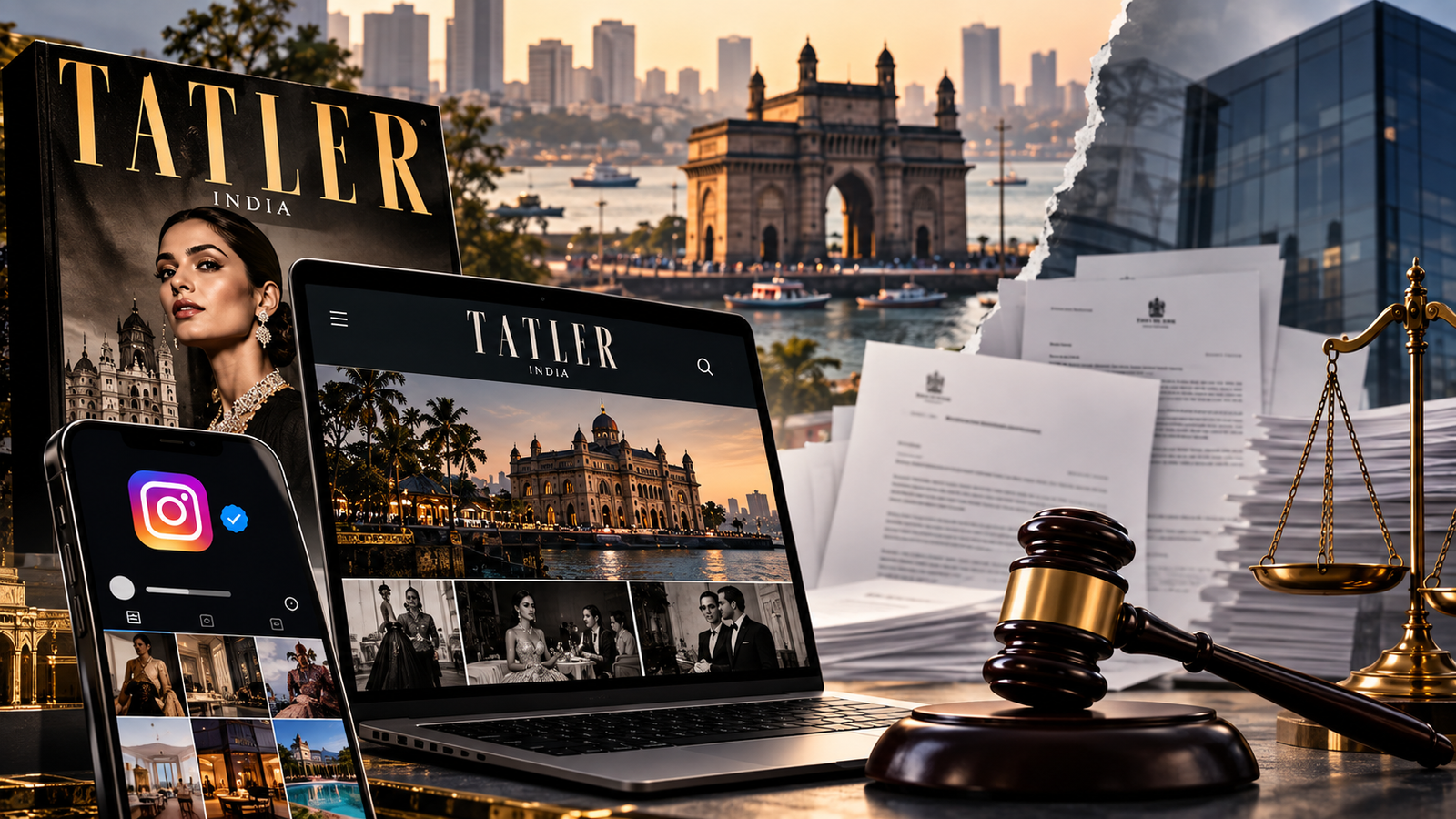
Founder Rajattkumar Dani says Voxora approached Tatler over an India opportunity months before the dispute intensified around tatlerindia.com and the @tatlerindia Instagram handle
Mumbai: A dispute surrounding the Tatler India digital identity has developed into a broader disagreement over domain ownership, social-media assets, trademark rights and the sequence of events that followed Voxora Media Group’s outreach to representatives associated with Tatler.
Voxora Media Group founder Rajattkumar Dani says his company first approached Tatler around the end of June with a proposal to explore the India market together.
According to Dani, Voxora had already acquired tatlerindia.com and had control of the @tatlerindia Instagram username at the time.
The company’s position is that its initial approach was commercial rather than confrontational.
“We approached them because we believed there was an opportunity to build something meaningful in India together,” Dani said. “The intention was to discuss partnership, infrastructure and whether there was a commercially sensible way forward.”
Questions Over the Timeline
Voxora is now drawing attention to what happened after that outreach.
Dani says Tatler had not, to Voxora’s understanding, established a dedicated India operation when the initial approach was made.
In the months that followed, however, India-facing activity around the Tatler brand increased.
Voxora says the timing has raised questions for the company because the shift occurred after it had already initiated discussions regarding the Indian market.
The company is not claiming that its outreach caused Tatler’s subsequent India activity. Instead, Dani argues that the chronology deserves scrutiny.
“We are not asking people to believe assumptions,” he said. “We are asking them to look at the dates, look at the correspondence and understand the sequence.”
Hotels and Brands Began Engaging With @tatlerindia
At the same time, Voxora says the @tatlerindia Instagram account began receiving attention from established hospitality and luxury businesses.
According to the company, hotels and other brands tagged the account and sent collaboration requests.
Some of those collaboration requests were accepted by Voxora.
For Dani, the development demonstrated that the digital identity had begun acquiring real commercial significance.
“When recognised hotels and luxury businesses start tagging an account or sending collaboration requests, it shows that the identity has value in the market,” he said.
The interactions also created an increasingly complicated situation because users and businesses could potentially associate the handle with the wider Tatler brand.
From Business Conversation to Legal Dispute
The relationship subsequently shifted from potential cooperation to legal disagreement.
Voxora says it later received a legal notice from Tatler Asia concerning the Tatler name and associated digital assets.
The @tatlerindia Instagram account was subsequently deactivated.
Voxora believes the account action occurred in the context of the wider intellectual-property dispute.
However, the company has not publicly produced evidence conclusively establishing who submitted the complaint that resulted in Meta disabling the account.
That distinction is important.
Without confirmation from Meta or documentary evidence identifying the complainant, it would be premature to state as fact that Tatler Asia directly caused the account’s removal.
Dani nevertheless questions why the situation reached that stage at all.
“If the handle had become important for their India strategy, there was always a professional way to deal with it,” he said.
“They could have approached us and said, ‘We need this asset. Let us discuss a commercial transfer.’ We were available for that conversation.”
‘It Never Needed to Become Hostile’
Voxora’s central argument is that a commercial negotiation should have been explored before the matter became adversarial.
Dani says his company had already demonstrated its willingness to engage with Tatler.
“We approached them first. We were open to partnership. We were open to discussing a buyout. We were open to a structured commercial resolution,” he said.
“If the assets were important to their India plans, there was always a professional option: speak to us, negotiate a commercial transfer and resolve it across the table. It never needed to reach this point.”
The domain tatlerindia.com remains under Voxora’s control, according to the company.
Dani has also stressed that control of a domain should not be confused with ownership of trademark rights.
“We are not saying that owning a domain automatically gives us another company’s trademark rights. It does not,” he said.
“But digital assets can have independent commercial value, and disputes over those assets can still be negotiated professionally.”
Domain Ownership and Trademark Rights Are Different
The dispute highlights an increasingly important distinction in the digital economy.
Acquiring a domain name does not automatically give its holder trademark rights over an existing brand.
Similarly, intellectual-property disputes involving domains can depend on several factors, including prior rights, legitimate commercial interests, the manner in which a domain was acquired and used, and whether there was any intention to mislead consumers or profit improperly from another party’s reputation.
Social-media accounts introduce an additional layer because Instagram operates under Meta’s own platform rules.
Meta can take action following trademark complaints or other policy issues independently of conventional domain ownership.
The Tatler India situation therefore involves several separate questions: who controls the domain, what trademark rights apply, what representations were made publicly, and why the Instagram account was ultimately removed.
Voxora Says It Has Preserved Evidence
Voxora says it has retained correspondence connected with its original outreach, follow-ups, discussions over the India opportunity and later legal developments.
The company says those records can be made available to journalists for independent review.
Dani says that is how he wants the dispute assessed.
“We are not asking the media or the public to blindly accept our side,” he said.
“Look at the chronology. Look at the emails. Look at when we approached them and what happened afterwards. Hear both sides and then form a view.”
Tatler Asia should be offered an opportunity to respond to Voxora’s account and provide its own explanation of the events.
A Wider Question for International Brands Entering India
Beyond the immediate disagreement, the case raises a larger strategic issue for global brands entering India.
Country-specific domains, social-media usernames and other digital identities can acquire considerable commercial value before a formal market entry takes place.
For international companies, securing those assets early can prevent disputes later.
For local businesses and entrepreneurs, the controversy is also a reminder that acquiring an available domain or social handle does not eliminate the legal risks associated with an established international trademark.
For Voxora, however, the immediate issue remains straightforward.
The company says it approached Tatler to discuss India commercially, the relationship later deteriorated, and it now wants the full chronology examined.
“A respectful conversation could have resolved this at the beginning,” Dani said. “We still believe business disputes are better solved through dialogue than unnecessary confrontation.”